At a time when hiring decisions influence revenue outcomes as much as growth strategies, talent intelligence has evolved into a critical business lever. Modern organizations are shifting from reactive hiring to data-driven workforce planning, where skills, behavior signals, and engagement patterns directly impact pipeline velocity, productivity, and long-term enterprise value.
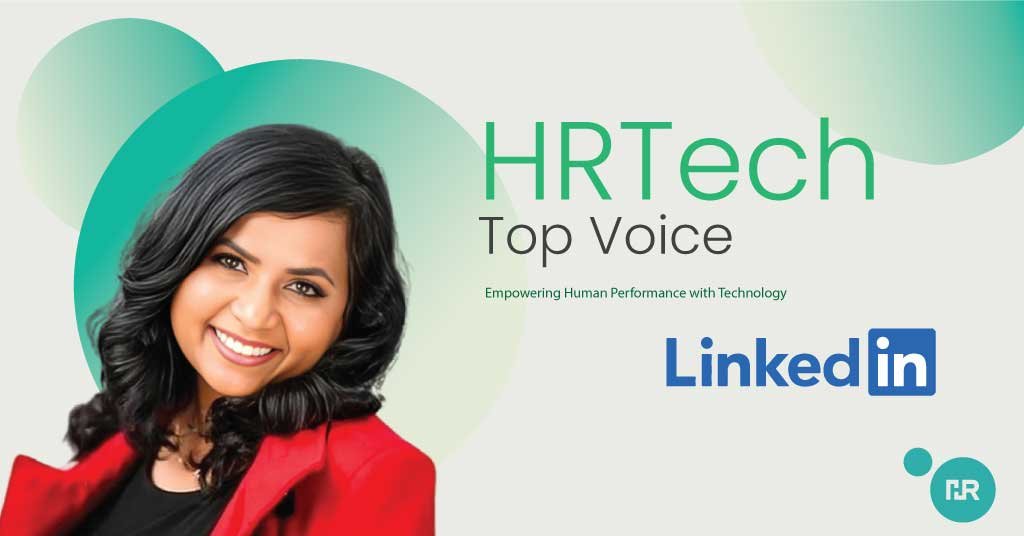
In this exclusive HRTech Top Voice conversation, Prashanthi Padmanabhan, VP of Engineering at LinkedIn Talent Solutions, shares how AI-powered platforms are redefining hiring, learning, and workforce development through the lens of revenue intelligence. From agentic AI in recruiting workflows to skills-based hiring models, she highlights how organizations can unlock deeper insights into talent performance, improve hiring precision, and build scalable growth engines.
Hosted by Sudipto Ghosh, Head of Global Marketing at Intent Amplify, this conversation explores how forward looking HR and business leaders can align talent strategy with measurable business impact, transforming workforce data into a strategic driver of revenue and competitive advantage.
Prashanthi Padmanabhan : I’m VP of Engineering at LinkedIn, where I lead engineering efforts for LinkedIn’s Talent products, including LinkedIn Recruiter and LinkedIn Learning. I have an amazing team that takes a holistic approach to building hiring, learning, and career development products.
A key way we stay on top of the HR technology landscape centers on leveraging our own platform, which has a vast amount of data, insights and opportunities for us to truly understand and learn from our members and customers. Their feedback and needs are our most important assets in developing products. Including Hiring Assistant, our AI agent for recruiters.
Prashanthi : AI skills have become non‑negotiable for professionals. Our latest Skills on the Rise data shows rapid growth in skills like AI Engineering & Implementation and AI Business Strategy as companies move from experimentation to embedding AI into core products and operations.
That shift is forcing hiring teams to rethink how they interpret skills signals across profiles, experience, and learning history while recruiters face increasing pressure to fill roles faster and uncover hidden‑gem candidates. As a result, recruiters are leaning more on AI agents that understand context and learn from feedback to help build stronger talent pipelines more efficiently
Organizations hoping to attract and retain talent are also investing in dedicated learning paths and resources to employees to help them upskill in AI and the human skills that have become even more important in the age of AI.
Prashanthi : From the early days of building Hiring Assistant, my team has been spending a lot of time listening to recruiter feedback on what AI features they see as most helpful in their day-to-day roles. We’re finding that AI can reduce the repetitive, time-consuming parts of hiring so they can spend more time on strategic, people-centric work. Early adopters of Hiring Assistant view 62% fewer profiles to find a match, achieve 69% higher InMail acceptance rates, and cut the time spent reviewing applications nearly in half. This allows recruiters to spend more time connecting with candidates, aligning with stakeholders, and making hiring decisions. While AI tools are becoming a bigger part of the HR process, talent teams’uniquely human judgment will continue to define great hiring.
Recommended: HRTech Top Voice: Interview with Wendy Gonzalez, CEO at Sama
Prashanthi : Agentic AI is reshaping workplace productivity by taking on the operational tasks that slow teams down. In HR workflows, especially recruiting, AI agents can handle sourcing, early screening, evaluation, and prioritization with speed and consistency, giving recruiters clearer signals to work from. This allows teams to focus on fit and skills through the noise, and also freeing recruiters to spend more time with candidates, leading to more confident decisions and higher‑quality hires.
We’re seeing this with Hiring Assistant. Recruiters tell us they’re uncovering candidates they might not have found otherwise, reviewing far fewer profiles before reaching a confident shortlist, and seeing higher engagement from candidates. We recently added our Unified Applicant Management and Evaluation feature that enables recruiters to seamlessly connect Applicant Tracking Systems (ATS) to unify application management and evaluation all in one place.
On the employee development front, we recently launched our LinkedIn Learning Career Hub product that’s built on top of LinkedIn Learning's content and AI-powered personalized learning experiences. Features enable customers to apply real-time skills intelligence and activate career pathways at scale, helping talent leaders guide and grow their employees for what's next. We’ve also expanded our LinkedIn Learning AI courses and curriculum so employees are supported with the skills and knowledge needed to move toward them with confidence.
Prashanthi : We have an unwavering commitment to responsible AI. We rigorously test for risks such as hallucinations and bias, and design our workflows so that recruiters always remain in control. Every action the AI assistant takes is transparent and open to feedback, helping the system continually improve with real-world use.
It’s also important to reiterate that there should always be a human in the loop. Hiring Assistant doesn’t make decisions, it helps recruiters save time and focus on what they do best: building trust and making smart, strategic decisions about talent.
Prashanthi : 59% of recruiters globally (66% in the U.S.) say AI is helping them uncover candidates with skills they’d never have found before. There are a number of ways AI can support skills based hiring – one example is AI’s ability to surface candidates who demonstrate the skills a recruiter is looking for using natural language search, including candidates who might have a particular skillset but did not use the exact terminology in their profile, helping recruiters discover talent they might otherwise have missed. AI can also help prioritize candidates based on how closely their skills align with the role and can automate parts of the screening process, such as gathering information about relevant experience or capabilities.
AI expands opportunity when it’s built on trust, a skills-based approach, and allows humans to stay in control of hiring decisions. That’s core to how we’re building our tools for job seekers and hirers. From the early days of Hiring Assistant, recruiters were clear that they want to understand how the agent thinks, reasons and arrives at recommendations. The product experience takes that into account - Hiring Assistant shows clear evidence of skills and experience match (across the candidate’s LinkedIn profile and resume).
Recommended: HRTech Top Voice: Interview with Carly Brush, SVP at DailyPay
Prashanthi : For small business owners who must juggle a thousand responsibilities and don’t have the same hiring resources as large enterprises, AI can be a total game changer. One example of how we’re helping SMBs at LinkedIn is LinkedIn Hiring Pro, our AI agent that helps identify, shortlist, and connect hirers with the right candidates faster by leveraging LinkedIn’s data signals and network of 1.3B+ members to uncover talent they might otherwise miss.
Cutting through the talent pool noise is tough, but we’re actually seeing that more than 60% of small business leaders across global markets say that starting and running a business is now easier due to AI’s impact. With LinkedIn Hiring Pro, customers who report time savings with Hiring Pro are seeing an average of 6+ hours saved weekly.
Prashanthi : Skills data helps companies have a more dynamic view of talent - how roles are evolving in real time and how skills cluster across industries and functions. That insight allows leaders to make more informed decisions about where to invest, whether that’s building new capabilities internally through upskilling or sourcing talent externally. When skills intelligence is paired with workforce analytics, organizations can plan more proactively across hiring, learning, and internal mobility. Over time, this helps companies stay more resilient as technology and business needs continue to change.
We built our Career Hub product for this purpose. It’s based on 1B+ careers and millions of weekly skill updates that connect evolving roles to the skills talent leaders demand, in real time. Employees who set a career goal in Career Hub come back to learn 5x more often. Organizations with Career Hub experience 20% longer tenure and see 22% higher internal mobility rates.
Prashanthi : Recruiting has always been deeply human work, but too much of a recruiter’s time is spent navigating coordination and administrative friction. AI can handle the operational parts of the workflow with speed and consistency, while keeping humans firmly in control of decisions. That shift allows recruiters to focus on higher‑value work like partnering more closely with hiring managers, aligning on skills and requirements, and building more meaningful relationships with candidates.
In this sense, AI can make recruiting more human, not less, as recruiters engage earlier, create a better candidate experience, and make more confident decisions.
Recommended: HRTech Top Voice: Interview with Karolina Michalska, People Services Lead at Avon
Prashanthi : As AI continues to reshape the workplace, organizations need to adopt a mindset that embraces change and prioritizes continuous learning. Building and refreshing skills that we know are in demand and incredibly relevant in today’s workforce – ranging from AI literacy to soft skills like communication and collaboration will be key to staying competitive. For business leaders, that means investing in employee training and creating team cultures that encourage and reward ongoing skill development.
Prashanthi : AI from both a skills standpoint and how companies hire continues to rapidly turn a highly competitive job market on its head – it’s transforming not only how we work but how people hire and get hired. 80% of people feel unprepared to find a job in 2026 and recruiters are feeling the pressure: two‑thirds (66%) say it’s become harder to uncover qualified talent - and hiring remains one of the most complex marketplaces, where thousands of candidates are considered to make a single great hire.
AI helps organizations move beyond surface‑level signals like titles and keywords toward deeper evidence of capability what someone has built, the skills they’ve demonstrated, and the context behind their experience. This shift enables recruiters to surface talent they might otherwise miss.
Still, the best systems keep humans in the loop. AI can surface better evidence, but people still own the judgment, relationships, and long-term thinking.
Alongside Hiring Assistant and Hiring Pro, we’re also investing in workforce planning and career development tools to help talent leaders keep pace with rapidly evolving roles and skills.
Prashanthi : The organizations that succeed will be the ones that treat AI agents as teammates, as members of the talent management organization – tools that amplify human strengths rather than replace them. As the humans in the loop become more comfortable incorporating agents into their daily work, I imagine the workforce of the future will look more efficient and open to new possibilities within their work.
Today the workflows across recruiting, onboarding and career development are time consuming, involving a lot of toil. AI agents are particularly good with processing large amounts of data and effective reasoning. When recruiters and talent leaders establish trust with these agents and leverage them effectively, it frees up humans to channel their energy to build deep relationships with candidates (future employees) as well as internally focus on employee development, internal mobility, career growth, etc.
For media inquiries, you can write to our HRTech Insights Newsroom at news@intentamplify.com
About Prashanthi Padmanabhan
Prashanthi is a seasoned technologist and product builder with over two decades of experience in the tech industry. She leads Engineering for LinkedIn Talent Solutions, where she sets technical direction for enterprise product lines such as LinkedIn Recruiter and LinkedIn Learning. Before this role, she was leading Engineering for LinkedIn Premium, building a world-class subscription platform, helping deliver customer value for millions of members and growing LinkedIn’s online subscriptions business. Prior to joining LinkedIn, she led engineering for large-scale consumer products at Yahoo and Verizon Media. She excels at operating at the intersection of business, technology and people, and her leadership style is rooted in compassion - for her teams and her customers.
Prashanthi is also the executive sponsor for the global Women In Tech community at LinkedIn and routinely mentors emerging women leaders inside and outside of LinkedIn. She writes on LinkedIn about topics spanning engineering, leadership, organizational culture, well-being and more. Outside of work, she is passionate about maintaining a healthy and active lifestyle.
About Linkedin

Founded in 2003, LinkedIn connects the world's professionals to make them more productive and successful. With more than 1 billion members worldwide, including executives from every Fortune 500 company, LinkedIn is the world's largest professional network. The company has a diversified business model with revenue coming from Talent Solutions, Marketing Solutions, Sales Solutions and Premium Subscriptions products. Headquartered in Silicon Valley, LinkedIn has offices across the globe.

Sudipto Ghosh is the Director of Global Marketing at Intent Amplify.
HRTech Top Voice Interview with Matthew Reeves, CEO and Co-Founder of Together